Specialists of the Northern Administration conducted an eco-lesson for preschoolers of the Arsky district
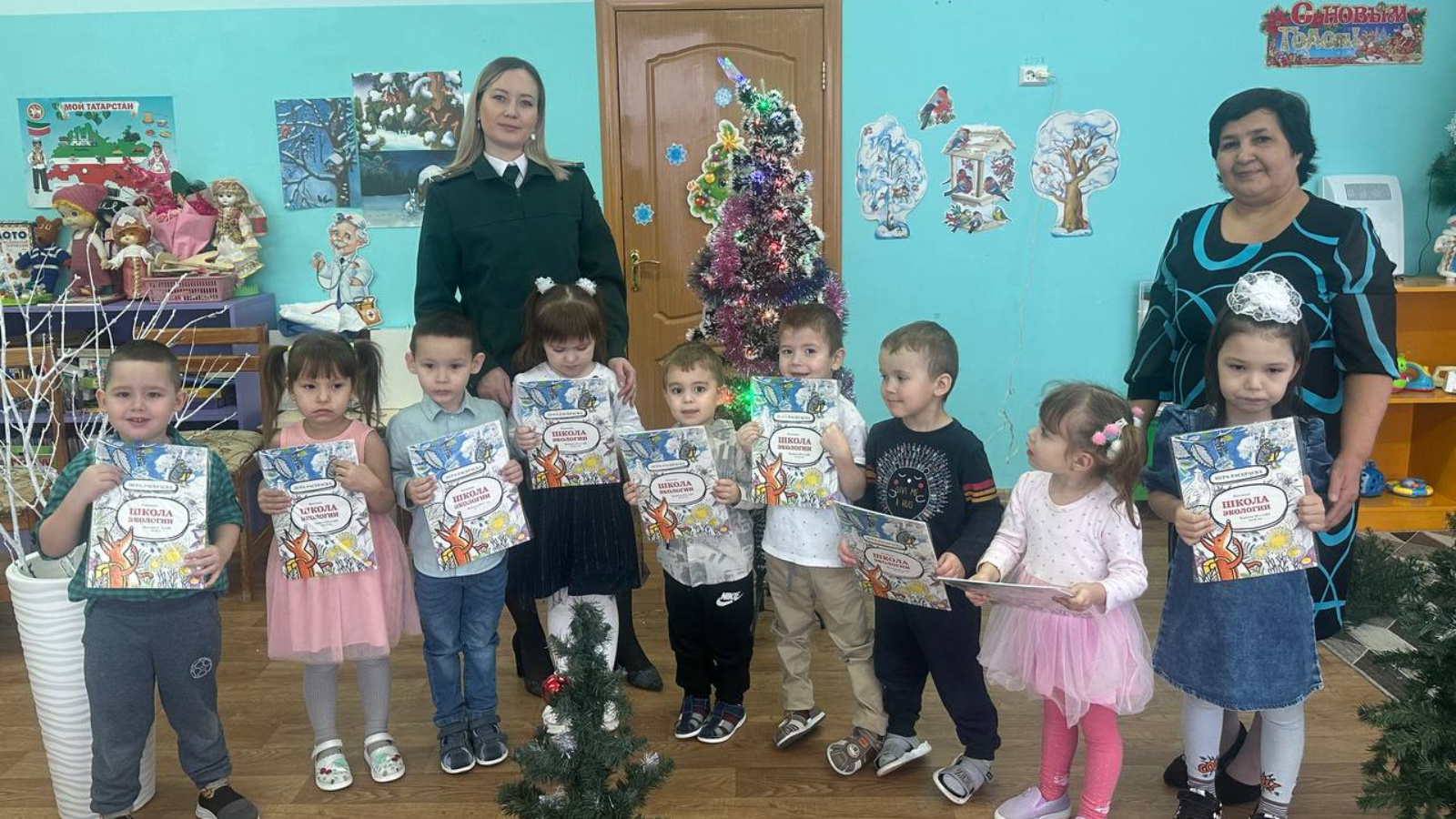
Specialists of the Northern Department of the Ministry of Ecology of the Republic of Tatarstan visited Novokinersky kindergarten of the Arsky district. The inspectors held an eco-lesson where they told the children about the nature of their native land and how important it is to take care of it. The guys learned that everything is interconnected in the world around them. The children were told how the disappearance of insect pollinators affects the harvest of berries, why it is forbidden to touch bird nests and how garbage thrown in the forest can harm animals. They were also reminded of the rules of behavior in nature: why you need to walk along the paths, you can not make noise in the forest, leave the campfire undone and take wild animals home.
The lesson was held in an interactive format. The children showed a prepared scene, transformed into the inhabitants of the forest. The kids also creatively and understandingly approached the important topic of preserving coniferous trees on the eve of the New Year holidays. Environmentalists, together with the kids, decorated a man-made Christmas tree made from improvised materials with bright crafts.
"Our goal is to turn knowledge into habits. Not just to say "don't ruin the nest," but to explain that the chick will stay alive if you don't touch it. Not just to forbid chopping down a Christmas tree, but to give a tool — an idea of how to create a holiday with your own hands without harming the forest. This is how a real ecological culture is born," said Guzel Yusupzyanova, inspector of the Northern Department.
The children actively participated in the quiz, where they solved riddles about forest animals, plants and natural phenomena.
At the end of the eco-lesson, all young conservationists received memorable gifts from the Ministry of Ecology of the Republic of Tatarstan, which will remind them of the rules of caring for the outside world.
Conducting such lessons forms the foundations of ecological culture and responsible attitude towards the environment in children from an early age, which contributes to the achievement of the goals of the national project "Environmental well-being".