"Alga" and "Timer" were the names of the sakers, who were born in Tatarstan for the first time in the last 50 years
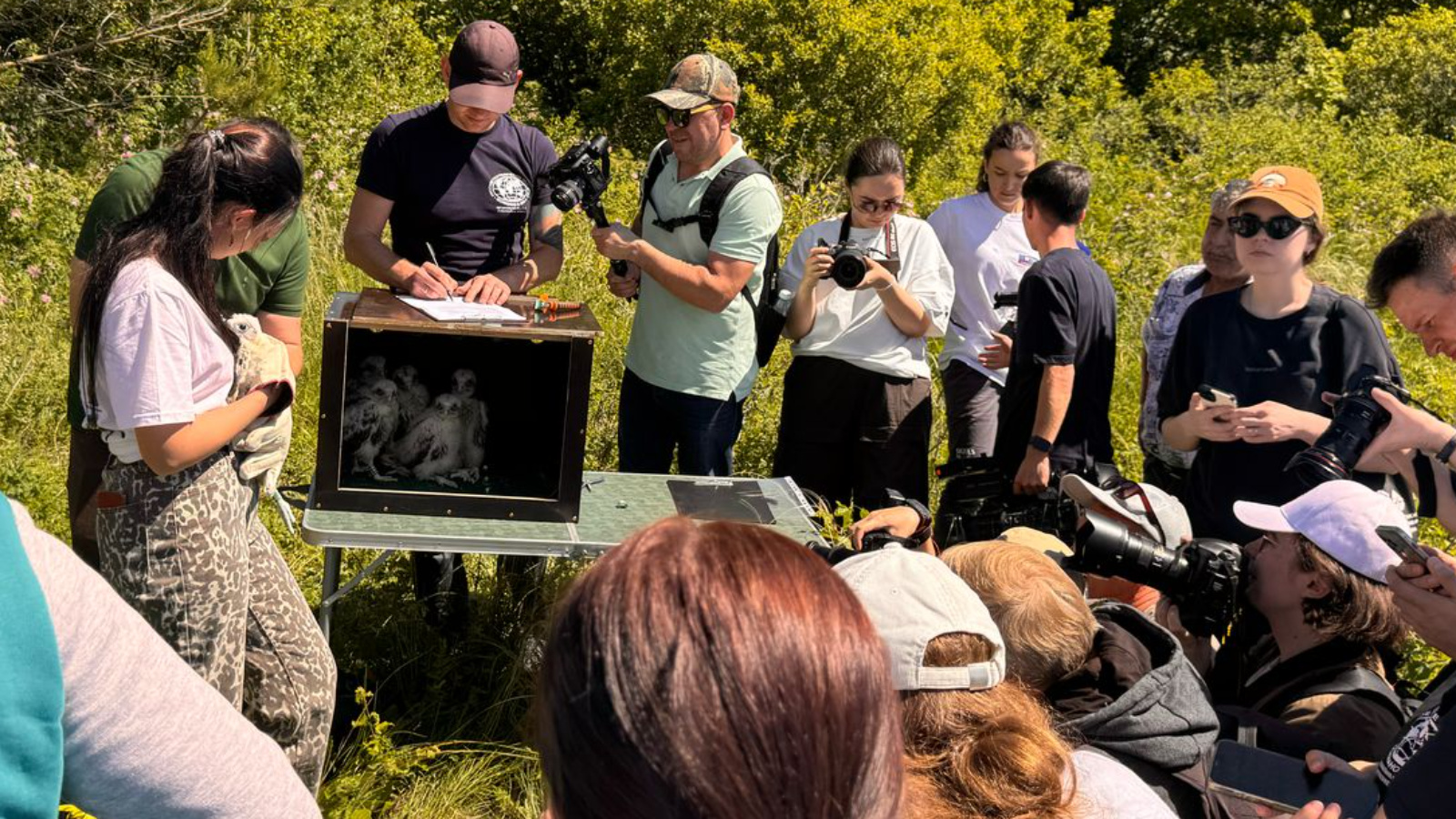
In Tatarstan, grown-up sakers, born for the first time in the last 50 years, have received names. This was announced by the Head of the Republic, Rustam Minnikhanov, in his Telegram channel.
According to him, the falcons have already grown stronger and may leave the nest in the coming days.
"A month ago, I asked you to come up with names for our falcons. During this time, the sakers have grown up and become stronger. And any day now they can leave the nest," Minnikhanov wrote.
The leader of the republic noted that these are the first falcons born in Tatarstan in the last half century, and expressed the hope that they will not be the last.
After studying the proposals received from the residents, they decided to name the birds with symbolic names: the girl — Alga, which means "Forward", and the boy — Timer ("Iron").
The Saker Falcon is a rare bird species that is listed in the Red Books of the International Union for Conservation of Nature, the Russian Federation and the Republic of Tatarstan.
In 2025, a seasonal project of the Ministry of Ecology and Natural Resources of the Republic of Tatarstan is being implemented in the Kamsko-Ustinsky district to revive the Volga-Kama Saker Falcon population, the last time its nesting was recorded in 1974 on the territory of the Saralinsky section of the Volzhsko-Kama Reserve.
The project is implemented in support of the national Environmental Well-being project
In 2024, 4 adult birds were placed in the aviaries of the Kazan Zoo for the formation of pairs and breeding of chicks in the Republic of Tatarstan, as a result of which 2 Saker falcon chicks were bred in 2025 for subsequent release into nature.
The main stages of the project were the delivery of 6 chicks from a nursery in the Moscow region and 2 Tatarstan chicks to the Kamsko-Ustinsky district of the republic at the end of May 2025, the installation of video surveillance systems in a cage (artificial nest), the organization of feeding and preservation of birds, and then their release into their natural habitat.
For the first time, birds began flying on June 14. As of June 27, 4 individuals of the Saker falcon have reached high flight performance, have taken to the wing and are independently foraging for food. The remaining 4 individuals of the Saker falcon are currently flying, but fly back to hack for food. Bird watching continues.