Russians want to see more news about environmental education and the state of water resources
Experts from the VTsIOM Analytical Center, together with the Federal Agency for Water Resources, summed up the results of a survey of Russians on the topic of water resources. According to the respondents, the topic of water is among the top 3 most pressing environmental issues, along with air quality and waste. The issues of the state of water bodies are by a wide margin ahead of the problem of forest depletion.
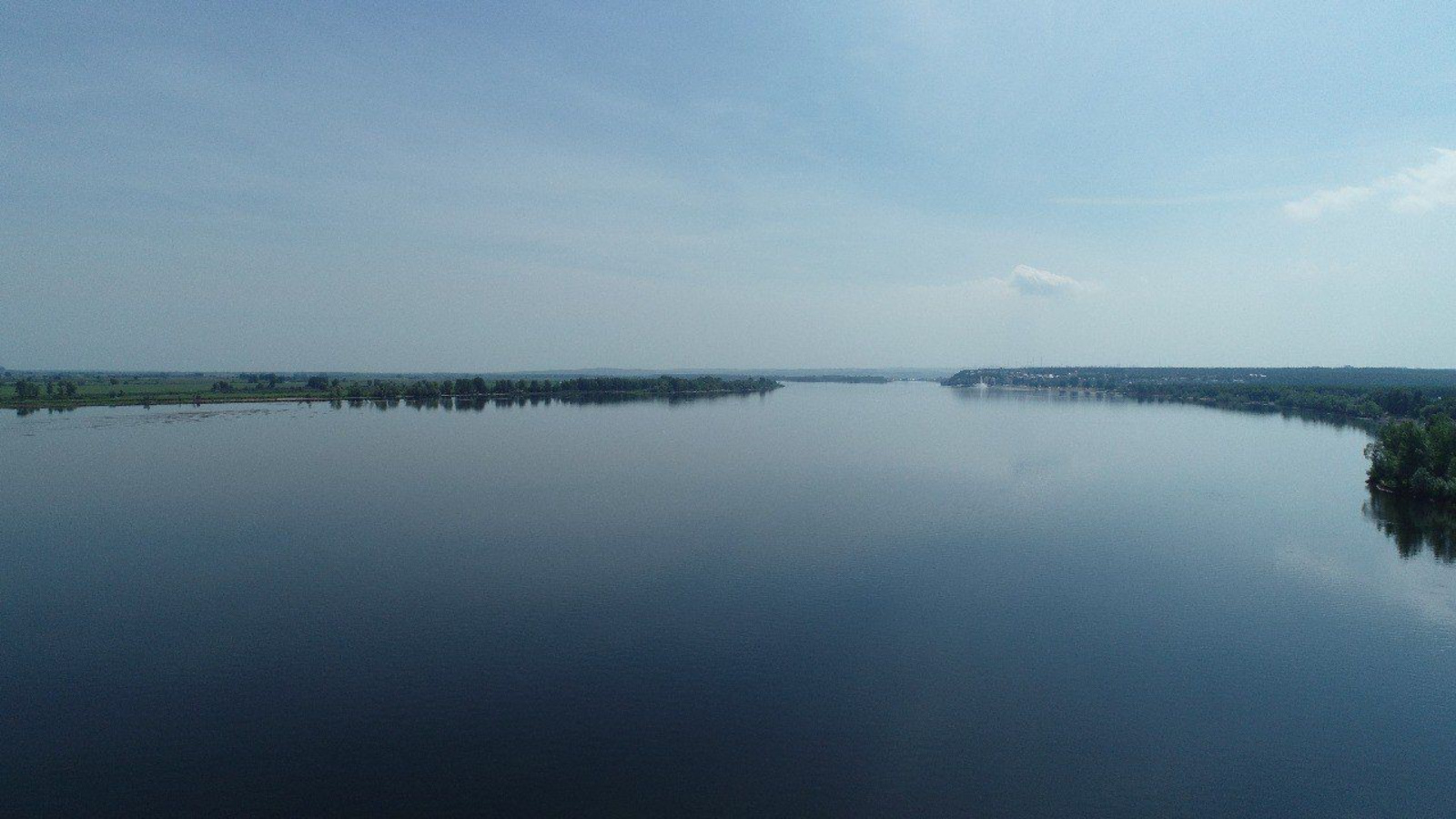
Tatarstan is one of the most water–rich regions of the Volga Federal District. We have more than 36 thousand water bodies – and this is our main wealth, a source of water supply for every second Tatarstan citizen. Water is also the most important resource for all sectors of the economy – energy supply, shipping, fishing and much more.
As part of the federal project "Improving the Volga River", 13 wastewater treatment plants were built and reconstructed in Tatarstan, including the largest biological wastewater treatment plants in Kazan.
According to the federal project "Conservation of unique water bodies", 4 water bodies have been cleared since 2021.
In close partnership with leading institutes of the Russian Academy of Sciences, the Academy of Sciences of the Republic of Tatarstan, and the Russian Geographical Society, scientific research has been conducted on the example of the Kazanka River. Since 2023, the Tatarstan branch of the Russian Geographical Society has been carrying out work on clearing rubble on the Kazanka River as part of the Free Current project. Thanks to the support of the Head of Tatarstan, the project continued in 2025. In total, 69 rubble has been cleared over these three years, 32 km of the river has been traversed, and 5,000 cubic meters of wood have been lifted from the water.
Within the framework of the new national project "Environmental well-being" This year, the federal project "Water of Russia" began work on clearing the 2nd section of the Melekeska River in Naberezhnye Chelny with a length of 3.1 km.
A full-scale ecorehabilitation of another iconic river for Kazan, the Noksa, with a length of more than 27.9 km, is planned from 2028.
For the past four years in a row, Tatarstan, thanks to the support of residents, has been the absolute record holder of the campaign."Water of Russia" to clear the shores of reservoirs.
"The result of all these works was a 1.3-fold decrease in the number of detected exceedances in water bodies over the past five years (since 2019), which is proved by the data from our scientific monitoring of the Kuibyshev reservoir. For the past three years, we have been conducting a survey of the reservoir with the help of the Flamingo research vessel. The length of the routes of the 8 expeditions in 2023-2025 amounted to more than 1.5 thousand km, during which about 4 million measurements were carried out on 16 indicators in automatic continuous mode," said Olga Manidicheva, Deputy Minister of Ecology.
"We are not only actively involved in issues of water supply to the population and the economy, the improvement of water bodies and the protection of the population from floods, but also pay great attention to environmental education of the population. Based on the survey results, we see that 84% of Russians are more or less aware of the state of water resources, and only 11% are deeply immersed in our agenda. We also see that there is a great demand for information about the state of water resources among Russian residents. This study confirms that we are moving in the right direction," said Dmitry Kirillov, Head of Rosvodresursy.
For reference: According to the VTsIOM Analytical Center, 1,626 Russians over the age of 18 took part in the online survey. The online survey was conducted using a formalized questionnaire based on the VTSIOM-Online probability panel.