Today, the Federal Agency for Water Resources held a meeting of the Interdepartmental Working Group on regulating the modes of operation of reservoirs of the Volga-Kama Cascade
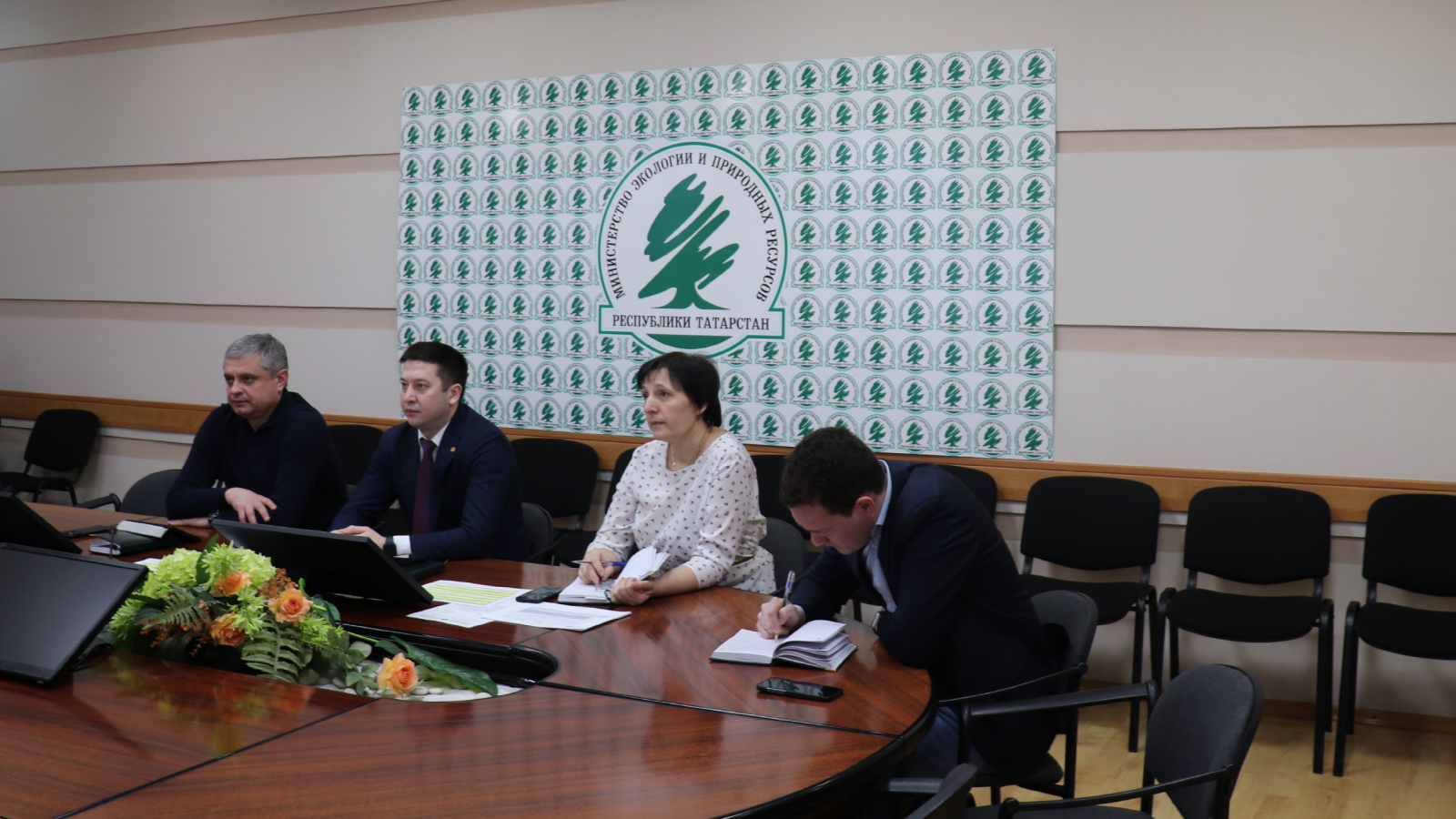
The meeting was attended by representatives of the territorial bodies of Rosvodresursy, Rosrybolovstvo, Rosmorrechflot, the Ministry of Emergency Situations of Russia, the Ministry of Agriculture of Russia, the Ministry of Natural Resources of Russia, Roshydromet, Rostechnadzor, JSC SO UES, PJSC RusHydro, JSC Tatenergo, and executive authorities of subjects located within the boundaries of the Volga-Kama basin.
Minister of Ecology and Natural Resources of the Republic of Tatarstan Alexander Shadrikov and Deputy Minister Almaz Tugushev took part in the video conference meeting on behalf of the Republic of Tatarstan.
The operating modes of the reservoirs of the Volga-Kama cascade were set for the period from March 11 to April 5.
In the period from February 10 to March 6, the water level of the Kuibyshev reservoir remained stable with a gradual increase. It increased by 16 cm from 50.59 m BS to 50.73 m BS.
As of February 29, the water reserves in the snow cover in the Volga-Kama basin amount to 127% of the norm (190.9 cubic km).
Due to the increase in water inflow to the Kuibyshev reservoir, Rosvodresursy proposed to increase discharge costs to 5600-5800 cubic m/s through the Zhiguli hydroelectric complex. This measure is necessary to preserve the free capacity of the reservoir, which is necessary for the reception and safe passage of the spring flood.
According to forecast calculations, by the beginning of the flood on April 1, 2024, the water level of the reservoir will be 50.65 m BS.
Taking into account the current water management situation, the Ministry supported the modes of operation of the Kuibyshev reservoir proposed by Rosvodresursy: the average discharge rate for the period is 5600-5800 cubic meters/s.
The established modes of operation of hydroelectric reservoirs will be published on the official website of Rosvodresursy.