The federal project "Improvement of the Volga" is able to improve the ecological condition of the main waterway of the country, deputies say
A visiting meeting of the Committee on Ecology, Nature Management, Agro-Industrial and Food Policy and the expert council under the committee was held today. Deputy Minister of Ecology and Natural Resources Egor Tarnavsky took part in it. The meeting discussed the implementation of the federal project "Improving the Volga River" of the national project "Ecology" in the Republic, as well as a number of federal bills and legislative initiatives of the regions.
The national project "Improvement of the Volga" is one of the key and capital-intensive federal projects. In Tatarstan, until 2024, the total amount of funding in this area is about 22.3 billion rubles, including 15.5 billion rubles from the federal budget. The main goal of the project is to improve the ecological condition of the main waterway of the country by reducing the volume of contaminated wastewater. For this purpose, the construction and reconstruction of 13 treatment facilities and the elimination of 2 objects of accumulated environmental damage that pose a threat to the Volga River are planned on the territory of Tatarstan.
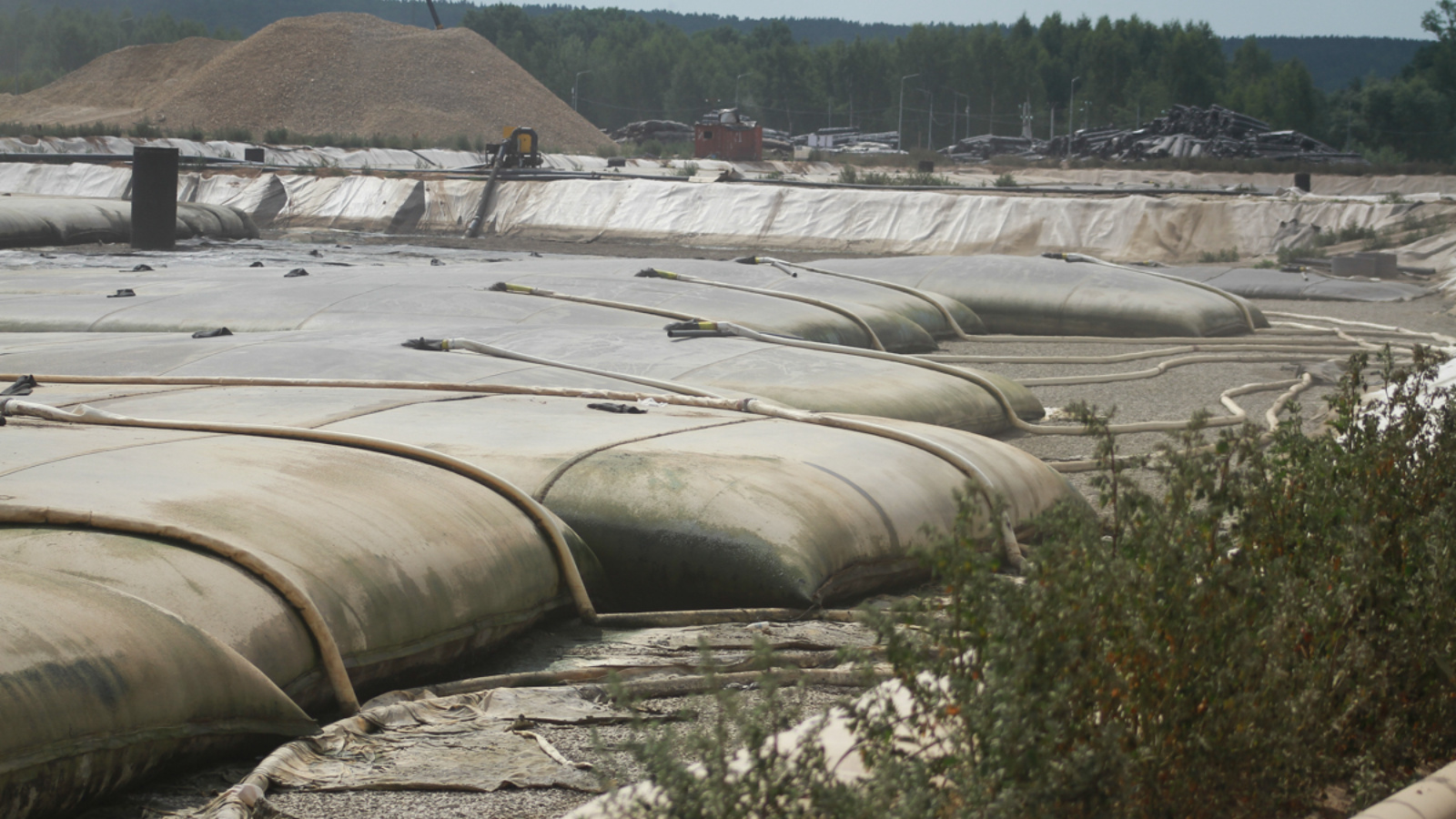
During the meeting, the deputies got acquainted with the progress of work at the facilities implemented within the framework of the national project "Ecology". They examined the silt fields of biological treatment facilities in Kazan. Since 2021, work has been underway here to eliminate a large object of accumulated environmental damage located in the water protection zone of the Kuibyshev reservoir. The reclamation is carried out within the framework of the federal project "Improvement of the Volga" in the direction of "Elimination (reclamation) of objects of accumulated environmental damage that pose a threat to the Volga River". Currently, work is underway on the installation of permanent anti-filtration protection, the movement of silt sediment, filling geotubes. The total readiness of the facility is 50.34%. The implementation period of the event is 2021-2024. As a result of the work, the environmental living conditions of the population of 1,257 thousand people will be improved.
The deputies also got acquainted with the progress of work on the reconstruction of biological treatment facilities in Kazan. The work here is being carried out within the framework of the federal project "Improvement of the Volga" in the direction: "Reduction of the share of polluted wastewater discharged into the Volga river" of the national project "Ecology". "Since 2021, a major project is being implemented – the reconstruction of biological sewage treatment plants in Kazan, which are among the top 200 main pollutants of the Volga River," said Yegor Tarnavsky. Currently, work is underway at the facility. The total readiness of the facility is 61.24%. The implementation period of the event is 2021-2024.
"The most important thing today is to clean up those drains that fall into the Volga," said Azat Khamayev, Chairman of the Committee on Ecology, Nature Management, Agro–Industrial and Food Policy – according to statistics, only a small percentage of treatment facilities in large cities comply with sanitary standards. The reconstruction project of the Kazan sewage treatment plants is planned to be implemented in two stages: the first is completed this year, the second – in 2024. After that, we will be able to guarantee that the treatment facilities of Kazan will meet the approved standards for cleaning emissions."
As the Deputy Minister of Ecology and Natural Resources of the republic Egor Tarnavsky noted, ships flooded in the water areas of reservoirs also carry considerable harm and threat to the river. "The Ministry of Natural Resources of Russia has supported our pilot project for the recovery of sunken ships, a priority list of objects has been determined.
Separately, Yegor Tarnavsky focused on one of the main factors of water pollution – diffuse effluents from agricultural enterprises, the most dangerous of which are livestock effluents. "One of the options to exclude such drains is the organization of special lagoons for manure conservation, and the creation of water protection protective forest strips along the shores of water bodies can also be an effective method," the Deputy Minister of Ecology noted. The possibility of implementing a pilot project on the territory of Tatarstan to create such protective forest strips within the framework of the federal project "Improvement of the Volga" is being worked out with the Ministry of Natural Resources of Russia.