"Water is worth its weight in gold! The federal project "Volga Health Improvement" is the health and prosperous ecological future of our children!"
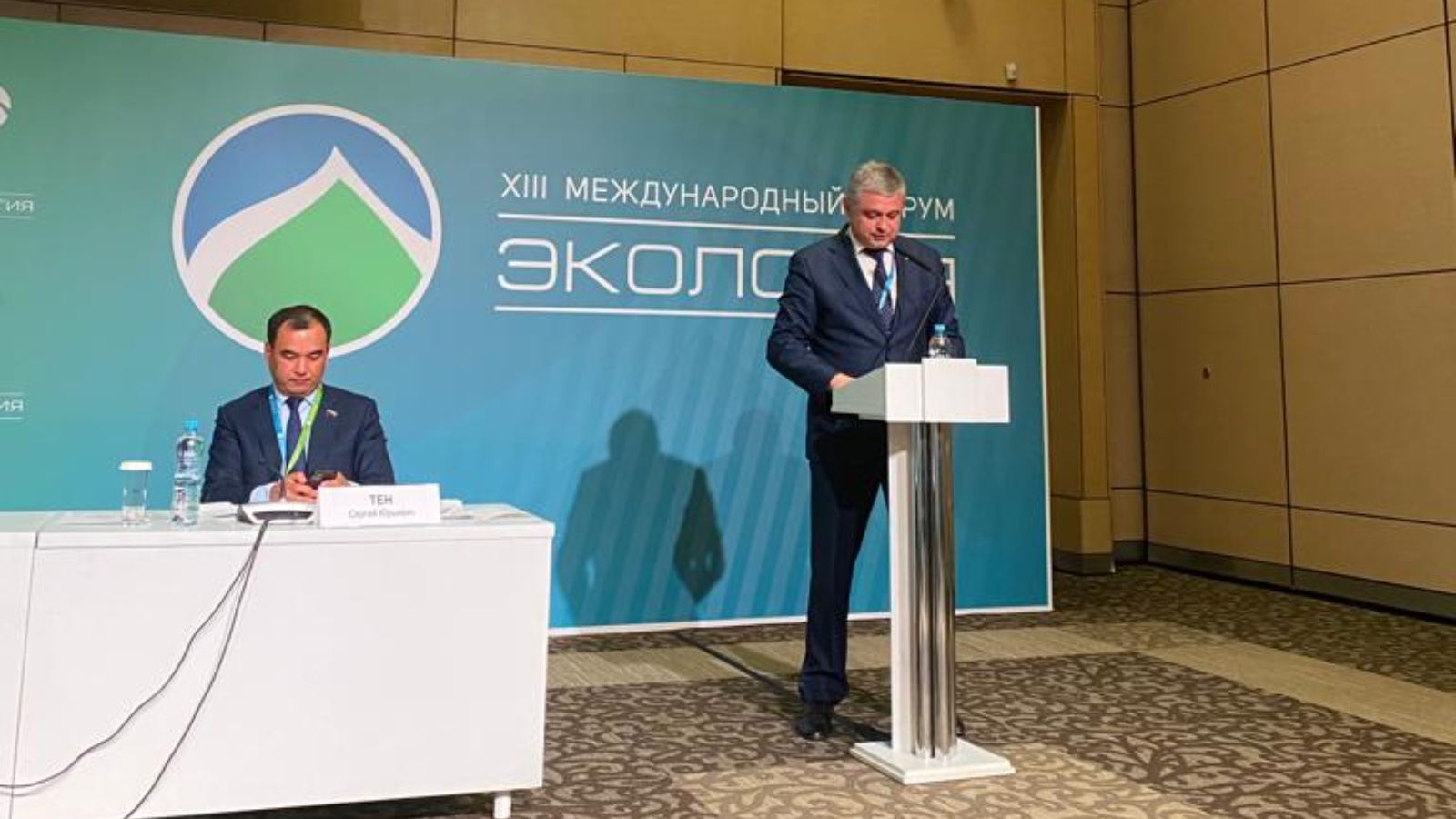
Today in Moscow at the international forum "Ecology", the Minister of Ecology of the Republic of Tatarstan Alexander Shadrikov spoke about the work within the framework of the federal project "Improving the Volga" of the national project "Ecology". At the very beginning of his speech, the speaker thanked Tatarstan residents for supporting the "Water of Russia" campaign, which took place this weekend in many cities of the country and where Kazan became the leader in terms of the number of participants.
He noted that this annual campaign takes place within the framework of the federal project "Improvement of the Volga" – one of the key and capital-intensive in the national project "Ecology". "In Tatarstan, until 2024, the total amount of funding in this area is about 18 billion rubles, including 13 billion from the federal budget.
The main goal of the project is to improve the ecological condition of the main waterway of the country by reducing the volume of contaminated wastewater. For this purpose, the construction and reconstruction of 13 treatment facilities and the elimination of 2 objects of accumulated environmental damage are planned on the territory of our Republic," the Minister elaborated on several measures implemented within the framework of the federal project.
In particular, he spoke about the project for the reclamation of silt fields of biological treatment facilities in Kazan and the dismantling of the inactive pipeline of the Lake oil field in the waters of the Nizhnekamsk reservoir. The pipes were flooded after the reservoir level was raised and currently pose a threat not only to the Volga, but also to a quarter of the population of the Republic of Tatarstan, because the reservoir provides water to more than 900 thousand people. The cost of the work is 930.5 million rubles, the ministry is ready to start the project from this year.
There are also plans to implement a pilot project for the recovery of sunken ships. According to the results of a survey conducted in 2016 at the expense of the budget of the Republic of Tatarstan, 90 submerged vessels were identified in the waters of the Kuibyshev and Nizhnekamsk reservoirs. As a result of several court sessions, decisions were made obliging Rosmorrechflot to raise 75 vessels. Currently, the Ministry of Natural Resources of Russia has supported the proposal of the Republic of Tatarstan to start implementing this pilot project from this year.
In addition, Tatarstan is already taking measures to restore and preserve rivers and lakes. So, in order to preserve unique water bodies, 4 objects are being cleared. The total amount of funding from the federal budget is 295 million rubles. Also, within the framework of the federal project "Preservation of Unique Water bodies", the Melekeska River is being cleared in Naberezhnye Chelny. The works are being planned to to take place in two sections with a length of more than 4.5 kilometers.
At the end of his speech, Alexander Shadrikov emphasized that the Volga River has always occupied a special place in the life of the country. It is a source of drinking water, electricity, provides irrigation and navigation. But first of all, of course, the river is a colossal biosystem, and it is important to monitor all key aspects of its vital activity. Including issues related to the regulation of the modes of operation of reservoirs of the Volga-Kama Cascade. They need to be addressed comprehensively. "About 60 million people live in the Volga basin – this is more than a third of the population of our country. About 45% of industrial and 50% of agricultural enterprises in Russia are concentrated here. The load on the river's water resources is 8 times higher than the average in Russia. We hope that thanks to our joint work on the timely implementation of measures within the framework of the federal project "Improvement of the Volga", we will come to the main goal – to reduce the share of polluted wastewater by 3 times, which means we will ensure a better ecological future for all residents of our country. After all, as the name of our panel discussion says, water is as good as gold!" the speaker summed up.