"We will monitor emissions into the atmosphere at three carbon landfills"
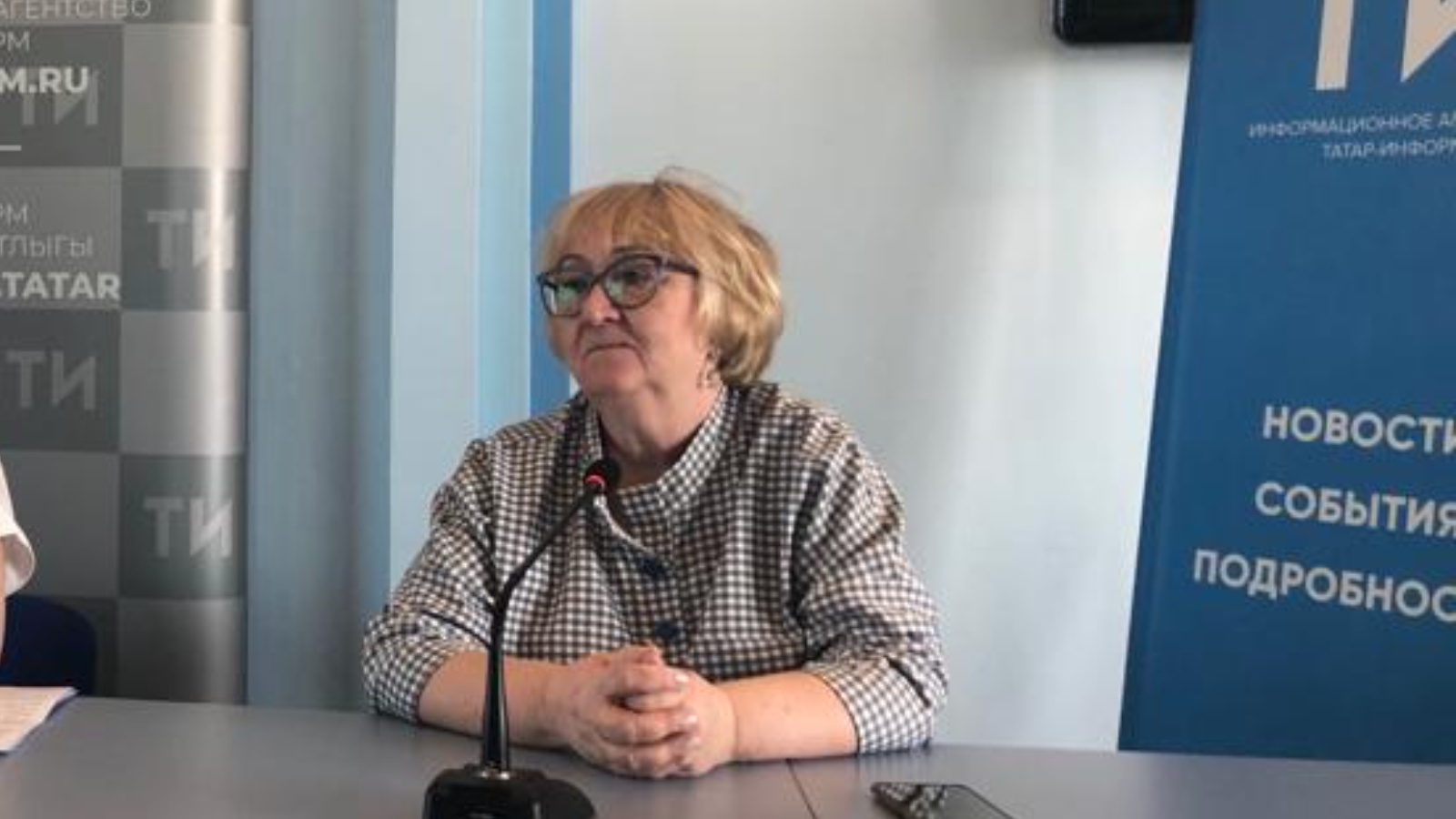
Svetlana Selivanovskaya, Director of the Institute of Ecology and Nature Management of KFU, Doctor of Biological Sciences, told reporters about the project on the development of carbon landfills in Tatarstan in an interview. She recalled that the coordinator of this pilot project in our republic is the Ministry of Ecology and Natural Resources, but the main role and the main guide for the creation of carbon landfills is, of course, science, the entire scientific potential of both the Russian Academy of Sciences and Tatarstan. It is no coincidence that the main body that provides scientific support for the activities of carbon polygons is the Ministry of Science and Higher Education of the Russian Federation. Under its auspices, carbon landfills are being created in the country. In Tatarstan, where the scientific approach is decisive in all industries and spheres, Kazan Federal University has become the Azov center. The main task of the Carbon-Volga landfill, as well as the whole project, is to obtain information. "We all say that there are a lot of forests in the republic and they should absorb CO2. We all know perfectly well that trees absorb CO2 during the day and emit it at night. The gas is also released when the tree dies. We need to understand what Russia looks like from the point of view of these natural ecosystems, which ecosystems absorb more and which emit more CO2. This is important for subsequent calculations," the speaker noted.
In addition, the functions of the carbon landfill will include activities for the development of climate projects. These are projects aimed at absorbing carbon dioxide from the atmosphere. In Tatarstan, monitoring of emissions of harmful gases into the atmosphere will be carried out at three carbon landfills – the forest, where the first tower for monitoring the sources of greenhouse gases, water and agricultural will be located. The forest area is located next to the KFU Observatory. Water area - on the Saralinsky section of the Volga-Kama Biosphere Reserve. Two plots are currently being considered for the placement of an agricultural plot. These will be either the fields of the Research Institute of Agriculture in the Kaban area, or the fields of the agrarian university in the Narmonka area. "As soon as we install a 40-meter tower 850 meters from the observatory, monitoring studies will begin. Ground tests began last year and will continue," Svetlana Selivanovskaya said.
For reference:
The carbon landfill is a platform for the development and implementation of new technologies for controlling greenhouse gas emissions. These are territories that combine unique absorbing ecosystems (forests, swamps, farmland, including abandoned ones) and digital technologies for remote and ground control of greenhouse gas emissions. For example, forests are the main natural sink of greenhouse gases in terrestrial ecosystems in the world: 1 ha of forests can absorb up to 7 tons of carbon dioxide per year. After selecting such natural sites, the project operator (university or scientific organization) installs weather stations and various modern devices for analyzing the concentration of greenhouse gases in the atmosphere, water, and soil. Remote technologies are also used, namely high-precision satellite images, allowing to supplement and verify ground measurements.